

Retrofit integration
New control units, displays and sensors go onto machines already in service, without redesigning the platform around them.
Makersan takes on OEM programs at system level: what the machine has to do, which control units, interfaces and sensors deliver it, how they talk to each other over CAN bus, and how the result is calibrated and validated on the machine itself.
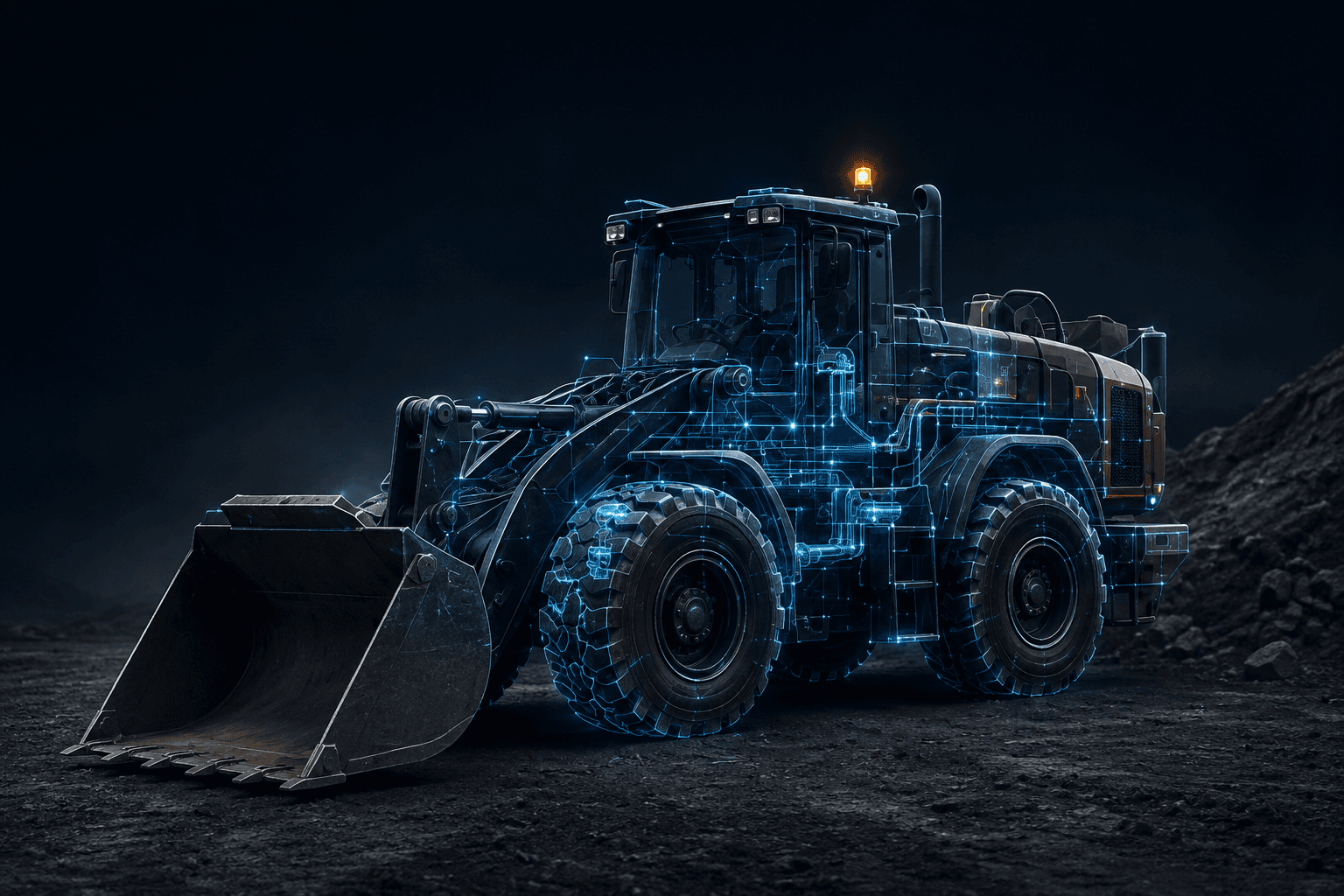
Subsystems on the machine
What you get
Use cases, duty cycles and operating limits become machine functions, interfaces, I/O counts and performance targets — the boundary of the system, written down before anyone opens a CAD file.
Control units, I/O topology, power distribution and the CAN network are laid out for a machine that still has to be diagnosable and serviceable years after it ships.
Embedded logic, operator screens, diagnostics and telematics are developed together, so what the operator sees and what the machine does cannot drift apart.
Enclosures, mounting, harness routing and panel layout are engineered for vibration, water, heat and the technician who opens the machine in the field.
The system is proved on the machine — functional testing, EMC pre-compliance, field validation — and stays supported through production release and aftersales.
From bench to serial production
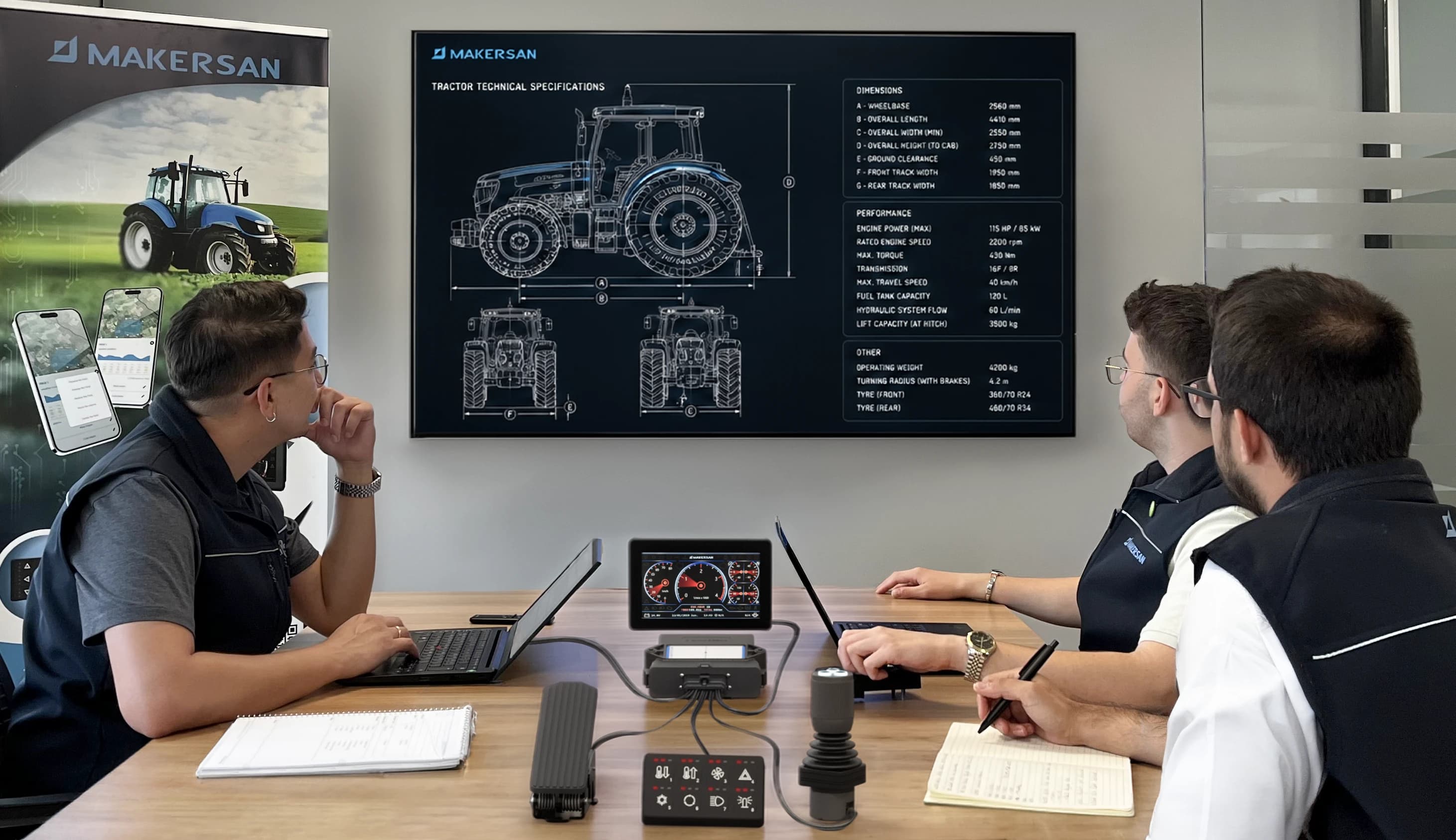
On the screen
The CAD assembly of the pedal, open at the revision under review.
On the table
The parts that revision becomes — pedals, grips and sensors, in hand while it is decided.
In the room
Mechanical, electronic and software engineers together, so a change in one discipline is not news to the other two.
New control units, displays and sensors go onto machines already in service, without redesigning the platform around them.
Standard products are configured, parameterised and adapted to what one machine and one operator actually need.
Requirements, control topology, CAN-bus layout and interface definitions are settled before any hardware is chosen.
Sensors, pedals and control loops are calibrated on the machine, then measured against the behaviour the specification asks for.
Mechanical and hydraulic controls give way to electronic ones, bringing older platforms up to current diagnostics and safety expectations.
One engineering team stays with the program from first concept through series production and field service.
The team that defines the architecture calibrates it on the machine and takes the field call two years later.
Controllers, screens, sensors, enclosures and the code inside them are all developed in-house.
EMC, environmental, vibration and endurance testing run in Makersan's own laboratories.
The company that engineers the system also molds, machines and assembles it, at OEM volumes.
Work with Makersan
Talk to the team about a product platform, custom integration or long-term OEM program.